


Table of Contents
Table of Contents
Warehouse performance used to be judged by a simple question: How fast can we move goods? Today, that question is incomplete—almost naive.

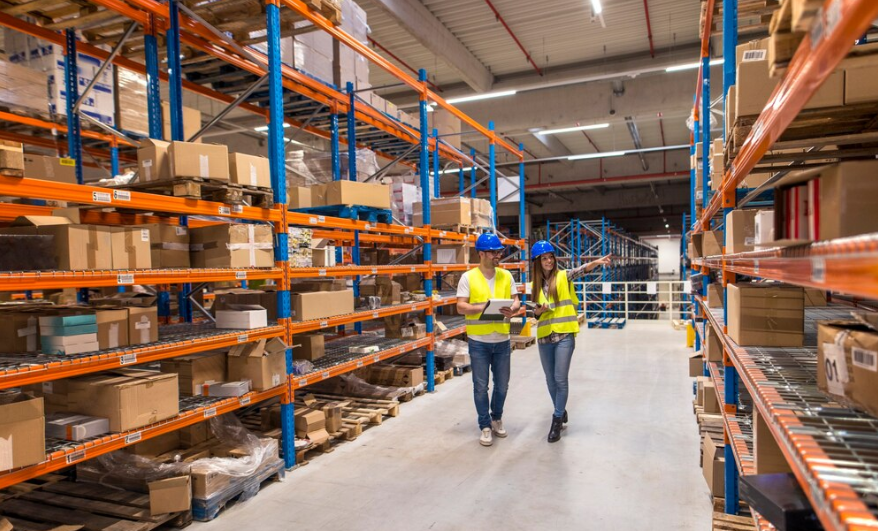
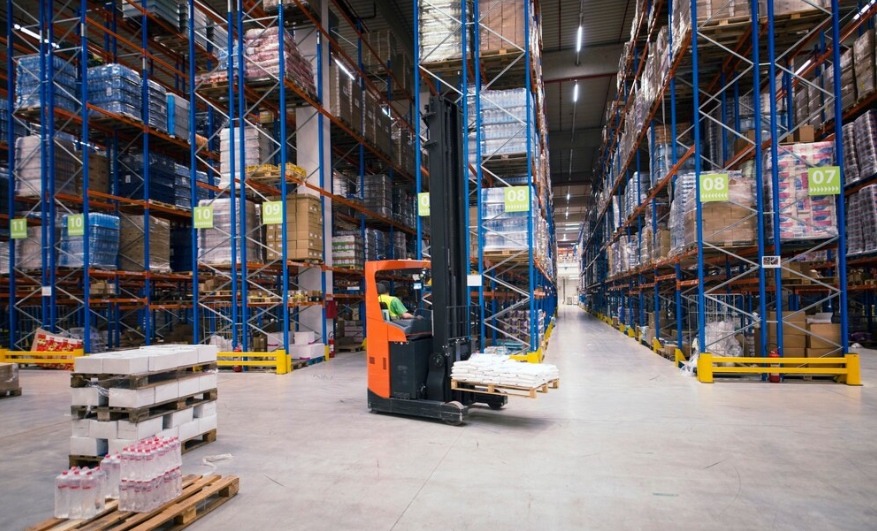

Modern warehouses, especially in the 3PL and eCommerce ecosystem, sit at the intersection of speed, cost, accuracy, and customer experience. A warehouse that ships fast but makes frequent errors is inefficient. One that is perfectly accurate but slow is equally flawed.
Evaluating warehouse performance, therefore, is less about isolated metrics and more about understanding how the system behaves as a whole.
This guide walks through how to evaluate warehouse performance properly—and how to turn that evaluation into real efficiency gains.
What Warehouse Performance Really Means
At its core, warehouse performance is the measurable effectiveness of operations across inbound, storage, and outbound workflows.
This includes:
How quickly inventory is received and made available
How accurately orders are picked and packed
How efficiently labor and space are utilized
How reliably orders reach customers
Key Performance Indicators (KPIs) are the backbone of this evaluation. They provide quantitative insight into productivity, accuracy, and cost efficiency across warehouse operations.
But here’s the nuance most teams miss:
Tracking KPIs is not the same as improving performance.
The real value comes from interpreting them correctly.
Step 1: Define What “Efficiency” Means for Your Warehouse
Before diving into metrics, clarify your operational priority.
Because “efficient” can mean very different things:
For a DTC brand → fast order fulfillment
For a B2B distributor → cost control and bulk handling
The mistake? Trying to optimize everything at once.
Instead, anchor your evaluation around 1–2 primary goals:
Speed (order cycle time)
Accuracy (error rates)
Cost (labor + storage)
Service level (on-time delivery)
Only then do your KPIs become meaningful.
Step 2: Track the Core Warehouse KPI Categories
Rather than tracking dozens of metrics, focus on high-impact KPI clusters.
Inbound Performance Metrics
Inbound inefficiencies ripple through the entire warehouse.
Key KPIs:
Dock-to-stock time (ideal: under 24 hours for best-in-class operations)
Receiving cycle time
Receiving accuracy
Why it matters:
If inventory isn’t available in the system, it might as well not exist.
Even small delays at receiving can stall fulfillment and reduce throughput.
Inventory Performance Metrics
Inventory is both an asset—and a liability.
Key KPIs:
Inventory accuracy (target: 95%+ or higher)
Inventory turnover
Carrying cost of inventory
Insight:
Low accuracy? You’re operating in the dark.
Order Fulfillment Metrics
This is where warehouse performance becomes visible to customers.
Key KPIs:
Order accuracy rate (best-in-class: 99.5%+)
Order cycle time
Perfect order rate
Mis-ship percentage
For context: Top-performing warehouses reach 99.9% picking accuracy.
That last 0.5% difference? It’s often the difference between profit and loss.
Labor Productivity Metrics
Labor is typically the largest warehouse cost.
Key KPIs:
Picks per hour
Orders processed per employee
Labor cost per order
Modern insight: Efficiency isn’t about pushing workers harder—it’s about removing friction from workflows.Space & Capacity Utilization
Warehouse space is expensive—and often underutilized.
Key KPIs:
Storage utilization rate
Throughput per square foot
Slotting efficiency
There’s a trade-off here:
Maximizing storage density can reduce picking speed. Smart operators balance both.
Step 3: Benchmark Against Industry Standards
KPIs only make sense in context.
Without benchmarks, numbers are just numbers.
Here are practical benchmarks:
| KPI | Typical Benchmark |
| Order accuracy | 99.5%+ |
| Picking accuracy | 99.4%–99.9% |
| Dock-to-stock time | <24–48 hours |
| Inventory accuracy | 95%+ |
| Order cycle time | 30 mins – 48 hours (depends on model) |
Benchmarking helps you answer one critical question:
Are we inefficient—or just average?
Step 4: Identify Bottlenecks (The Real Work Begins)
Here’s where evaluation turns into insight.
KPIs don’t fix problems—they reveal them.
Common bottlenecks:
Long travel time during picking
Poor warehouse layout
Inventory not where the system says it is
Manual processes slowing execution
Imbalanced workloads across stations
A practical example:
If order cycle time is high, ask:
Is picking slow?
Is packing overloaded?
Is inventory hard to locate?
Each KPI is a symptom—not the root cause.
Step 5: Connect Metrics to Root Causes
This is where many warehouses fall short.
They see:
“Order accuracy dropped to 97%”
But they don’t ask:
Was it picking errors?
Packing mistakes?
Inventory inaccuracies?
Break KPIs down into micro-level diagnostics:
Wrong item → picking issue
Wrong quantity → counting or system issue
Wrong address → packing/labeling issue
Only then can improvements be targeted—and effective.
Step 6: Use Technology to Enhance Visibility
Manual tracking is no longer enough.
High-performing warehouses rely on:
Barcode/RFID tracking
Real-time dashboards
Predictive analytics
These tools:
Reduce human error
Provide real-time KPI tracking
Enable faster decision-making
In fact, modern WMS platforms directly connect KPI tracking to workflow optimization.
Step 7: Evaluate Performance Holistically (Not in Silos)
A common mistake is optimizing one metric at the expense of another.
Examples:
Faster picking → more errors
Higher storage density → slower fulfillment
Lower labor cost → delayed shipments
Warehouse performance must be evaluated across four pillars:
Inbound
Inventory
Fulfillment
Outbound
Only then do you get a true picture of efficiency.
Step 8: Build a Continuous Improvement Loop
Evaluation is not a one-time activity.
Top-performing warehouses follow a loop:
Measure KPIs
Identify gaps
Test improvements
Re-measure
Scale what works
This iterative approach transforms warehouses from reactive operations into data-driven systems.
Step 9: Align Warehouse Performance with Customer Experience
Here’s the strategic shift many companies overlook:
Warehouse efficiency is not just operational—it’s customer-facing.
Every KPI impacts:
Delivery speed
Order accuracy
Return rates
Customer satisfaction
In eCommerce and 3PL, the warehouse is the brand experience.
Step 10: How 3PLs Like SendFromChina Should Evaluate Performance
For third-party logistics providers, evaluation becomes more complex.
You’re not just optimizing operations—you’re managing multiple clients with different expectations.
Key additional KPIs:
SLA compliance rate
Client-specific accuracy metrics
Cost per client/order
Scalability during peak seasons
Efficiency, here, means:
Common Mistakes to Avoid
Let’s be blunt—most warehouse evaluations fail because of these:
Tracking too many KPIs
Ignoring root causes
Focusing only on cost reduction
Neglecting data accuracy
Treating evaluation as a one-time audit
The fix? Simplicity + consistency.
Conclusion
Evaluating warehouse performance is not about dashboards filled with numbers.
It’s about clarity.
When done right, evaluation helps you:
Identify hidden inefficiencies
Reduce operational costs
Improve order accuracy
Deliver better customer experiences
The most efficient warehouses are not the fastest or cheapest.
They are the ones that understand their data—and act on it consistently.
FAQs
What is the most important warehouse KPI?
Order accuracy is often the most critical because it directly impacts customer satisfaction and costs.
How often should warehouse performance be evaluated?
Ideally, KPIs should be monitored daily, with deeper analysis conducted weekly or monthly.
What is a good warehouse order accuracy rate?
Best-in-class warehouses achieve 99.5% or higher.
How can I improve warehouse efficiency quickly?
Focus on reducing picking travel time, improving layout, and implementing a WMS.
Why is inventory accuracy so important?
Because inaccurate inventory leads to stockouts, delays, and fulfillment errors.
 Want to know about our services, fees or receive a custom quote?