


Table of Contents
Table of Contents
Fulfillment is rarely the first thing founders obsess over. It sits quietly behind product development, marketing campaigns, and customer acquisition—until it doesn’t. Orders pile up. Shipping delays creep in. Margins tighten. Suddenly, logistics becomes the backbone (or bottleneck) of your business.
At that point, a critical decision emerges: should you manage fulfillment internally, or partner with a third-party logistics provider (3PL)?
This is not a simple cost comparison. It’s a strategic choice that shapes scalability, customer experience, and long-term profitability. Let’s unpack both models—honestly, practically, and with real-world nuance.
What Is Third-Party Logistics (3PL)?
Third-party logistics (3PL) refers to outsourcing key supply chain operations—such as warehousing, inventory management, order fulfillment, and shipping—to a specialized provider.
Instead of building logistics infrastructure yourself, you plug into an existing system.
A modern 3PL typically offers:
Warehousing and storage
Shipping and last-mile delivery coordination
Returns (reverse logistics)
Technology integrations (Shopify, Amazon, TikTok Shop)
The appeal is straightforward: leverage expertise, infrastructure, and scale without owning it.
And the trend is undeniable. The global 3PL market is projected to exceed $1.3 trillion by 2026, with over 86% of Fortune 500 companies relying on such services.
What Is In-House Fulfillment?
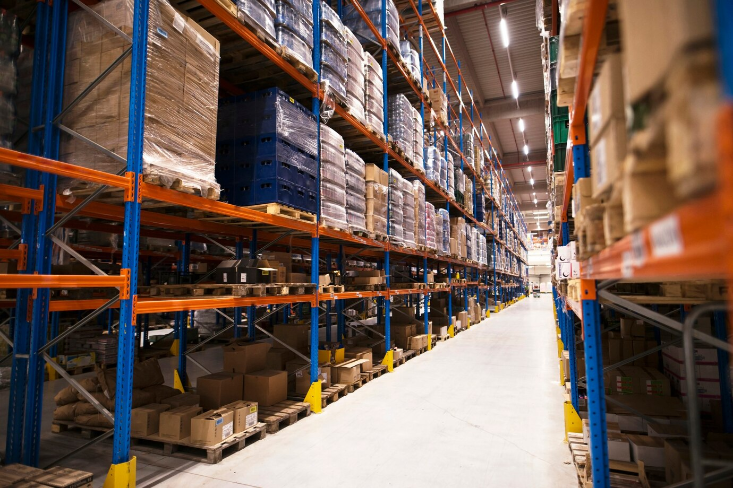
In-house fulfillment means handling everything yourself—your warehouse, your staff, your systems, your shipping contracts.
You control:
Inventory storage
Order processing
Packaging standards
Shipping workflows
It’s the DIY approach. Full ownership. Full responsibility.
For some businesses, this level of control is essential. For others, it becomes an operational burden.
The Core Difference (In Plain Terms)
At its simplest:
In-house = build and manage everything yourself
But that simplicity hides deeper trade-offs—especially around cost structure, scalability, and risk.
Cost Structure: Fixed vs Variable Reality
One of the most misunderstood aspects of this decision is cost.
In-House Fulfillment Costs
Warehouse rent or purchase
Equipment (shelving, forklifts, packing stations)
Labor (hiring, training, management)
Software (WMS, integrations)
Carrier contracts
These are largely fixed costs. You pay them whether you ship 100 orders or 10,000.
That creates efficiency at scale—but pain during slow periods.
3PL Costs
Storage fees
Pick-and-pack fees
Shipping costs (often discounted via volume)
Optional service fees
These are mostly variable costs, tied to your order volume.
That means:
Lower upfront investment
Easier cost predictability
Reduced financial risk during fluctuations
Outsourcing logistics also reduces capital requirements since you don’t need to own facilities or equipment.
Control vs Convenience
This is where the debate becomes philosophical.
In-House: Total Control
You decide everything:
Packaging design
Shipping speed
Quality control processes
Custom workflows
For brands with highly customized products (e.g., luxury packaging or subscription boxes), this control is valuable.
3PL: Operational Convenience
You give up some control in exchange for:
Operational efficiency
Standardized processes
Faster scaling
However, less control can mean:
Limited customization
Dependence on external service quality
As one industry insight puts it: in-house offers control, while 3PL prioritizes scalability and efficiency.
Scalability: The Breaking Point Factor
This is often the deciding factor—though many businesses realize it too late.
In-House Scaling Challenges
Growth sounds exciting until:
You run out of warehouse space
Hiring can’t keep up with demand
Systems start breaking under volume
Scaling internally requires:
New facilities
More staff
Operational redesign
Each step adds complexity and cost.
3PL Scaling Advantage
3PLs are built for scale.
They can:
Handle sudden order spikes
Expand across regions
Optimize shipping routes
Because they serve multiple clients, they benefit from economies of scale—reducing per-unit costs.
Speed and Customer Expectations
Today’s customers expect fast delivery—sometimes same-day, often two-day.
Meeting these expectations internally is difficult.
In-House Limitations
Single warehouse = longer shipping distances
Limited carrier discounts
Slower fulfillment during peak periods
3PL Advantages
Distributed warehouse networks
Faster last-mile delivery
Negotiated carrier rates
A China-based 3PL, for example, can position inventory closer to customers in the U.S. or Europe—reducing delivery times significantly.
Technology and Expertise
Logistics today is not just physical—it’s digital.
In-House Tech Burden
You must implement and maintain:
Inventory management systems
Order routing tools
Tracking integrations
This requires both investment and expertise.
3PL Tech Ecosystem
Most modern 3PLs offer:
Real-time inventory tracking
Automated order syncing
Data analytics dashboards
They continuously upgrade systems—something many businesses struggle to do internally.
Risk Management
Risk is often overlooked—but it matters.
In-House Risks
Operational disruptions (staff shortages, system failures)
Demand volatility (overstaffing or understaffing)
High sunk costs
3PL Risks
Service inconsistency
Hidden fees
Less direct oversight
In reality, neither model eliminates risk—it simply redistributes it.
When In-House Fulfillment Makes Sense
In-house fulfillment is typically the right choice when:
You have stable, predictable order volume
Your product requires high customization or handling care
You want full brand control
You have logistics expertise in-house
You operate at scale where fixed costs become efficient
It’s a long-term investment play.
When 3PL Is the Better Choice
3PL is usually the smarter option when:
You are scaling rapidly
Order volume is volatile or seasonal
You want to expand internationally
You lack logistics infrastructure or expertise
You want to focus on growth (marketing, product, branding)
For many eCommerce brands, 3PL is not just operational—it’s strategic.
The Hybrid Model: A Practical Middle Ground
Here’s the truth many blogs gloss over: it’s not always either-or.
Many successful businesses adopt a hybrid model:
In-house for core or high-value products
3PL for overflow, international orders, or peak seasons
This approach balances:
Control
Flexibility
Cost efficiency
And often delivers the best of both worlds.
A Real-World Perspective (From Operators)
Insights from industry practitioners highlight something often missed in theory:
“You are basically building a completely different business when you decide to do your own fulfillment.”
Another practical takeaway:
“3PL helps you scale and manage volatility… in-house can work once volume is consistent.”
In other words:
Start simple
Scale smart
Adapt as you grow
How to Decide: A Simple Framework
Ask yourself these five questions:
What is my current order volume—and how fast is it growing?
Do I have the capital to invest in infrastructure?
How important is customization to my brand?
Do I want to manage logistics—or outsource it?
Am I optimizing for control or scalability?
Your answers will point you in the right direction.
Why Many Brands Choose SendFromChina
For businesses sourcing or shipping from China, partnering with a specialized 3PL like SendFromChina offers unique advantages:
Strategic warehouse positioning
Cross-border logistics expertise
Faster global delivery routes
Cost-efficient fulfillment solutions
Especially for international sellers, this can significantly reduce shipping times and operational complexity.
Conclusion
There is no universally “better” option between third-party logistics and in-house fulfillment.
Only alignment.
In-house fulfillment offers control, customization, and long-term efficiency at scale
3PL offers flexibility, scalability, and operational simplicity
The right choice depends on where your business is today—and where youwant it to go.
And in many cases, the smartest strategy isn’t choosing one. It’s knowing when to switch—or combine both.
FAQs
Is 3PL cheaper than in-house fulfillment?
Not always. 3PL reduces upfront costs but may be more expensive at very high volumes.
When should I switch to a 3PL?
Usually when order volume grows beyond what your team can handle efficiently.
Can small businesses use 3PL?
Yes. Many 3PLs are designed specifically for startups and SMEs.
Do 3PLs handle international shipping?
Yes. Many specialize in cross-border logistics and customs handling.
Is a hybrid fulfillment model common?
Yes. Many growing brands combine in-house and 3PL for flexibility.
 Want to know about our services, fees or receive a custom quote?